Spike in reports of scammers impersonating Qantas to steal your personal information and money.
What’s happening
Scammers are impersonating Qantas in emails and text messages to steal your personal information and money. They create a sense of urgency to try and get you to act quickly without checking first.
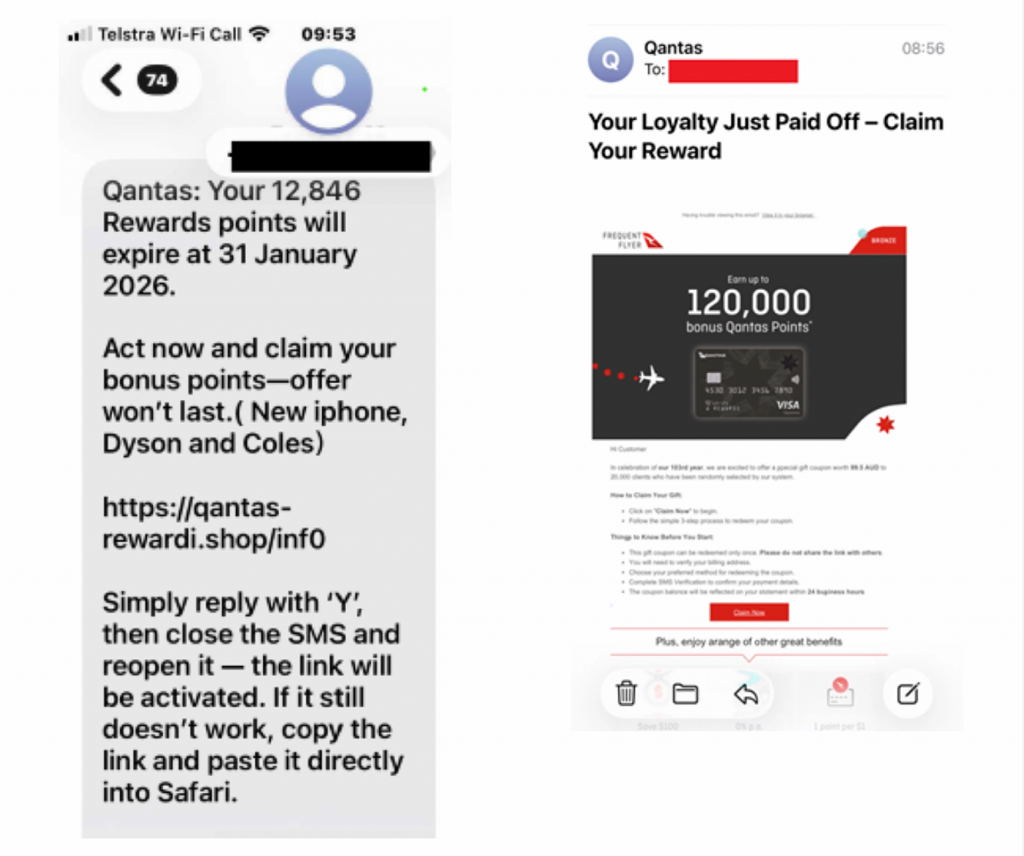
Scammers will use Qantas logos and branding to make the communication look real. The email or text message will urge you to click a link to either:
-
claim a refund
-
claim a gift
-
redeem points that are about to expire.
If you click this link you will be directed to a scam website designed to steal any information you enter.
Qantas has been warning of these sorts of scams, which were first identified in August 2025, and encourages customers to be alert to continued scam activity. The airline does not contact customers to ask for their PINs, passwords, or one-time passwords in text messages or email.
More information can be found on Qantas.com dedicated scams page. The NASC and Qantas work collaboratively to share scam intelligence and to disrupt scams.
Who’s at risk
Anyone could be targeted by this scam. You do not need to be an existing Qantas customer or Qantas Frequent Flyer. However, people who know or suspect they have been involved in a data breach may be at greater risk of being targeted.
What it looks like
Examples of a Qantas impersonation scam text and email are below.
If you’ve been affected
Don’t be embarrassed about being scammed.
- If you’ve had money or personal information stolen, contact your bank or card provider immediately.
- If you think your accounts have been compromised, change your passwords immediately.
- Monitor your bank statements and accounts for unusual activity.
- If you’ve been scammed or have provided personal information, call IDCARE on 1800 595 160.
- Help others by reporting to Scamwatch.
Warning signs to look out for
- Surprise offers that come from unsolicited emails or messages.
- Sender names, email addresses or website addresses that have been changed and look different from the legitimate domain of an organisation.
- Limited-time offers creating urgency such as expiring loyalty points or “missing out” on a refund or gift.
- Communications that ask for your personal details, password, PIN, credit card or banking information.
- Communications that ask you to click a link and enter personal or sensitive login information
Protect yourself from scams by:
- STOP. Scammers create a sense of urgency. Don’t rush to act, take your time. Never click a link, download an attachment, or enter personal or sensitive login information via a link in an email or message.
- CHECK. Check whether the message or email you’ve received is really from Qantas by using your official Qantas app, visiting the Qantas website, or calling Qantas directly using a number you source yourself. Qantas updates its scams awareness website with advice for customers.
- PROTECT. If you’ve given any personal information to someone you suspect is a scammer, act quickly. See more about what to do if you’ve been scammed and what steps you can follow.